Prayer Journaling During a Fast: Prompts for Hunger, Distraction, and Dependence
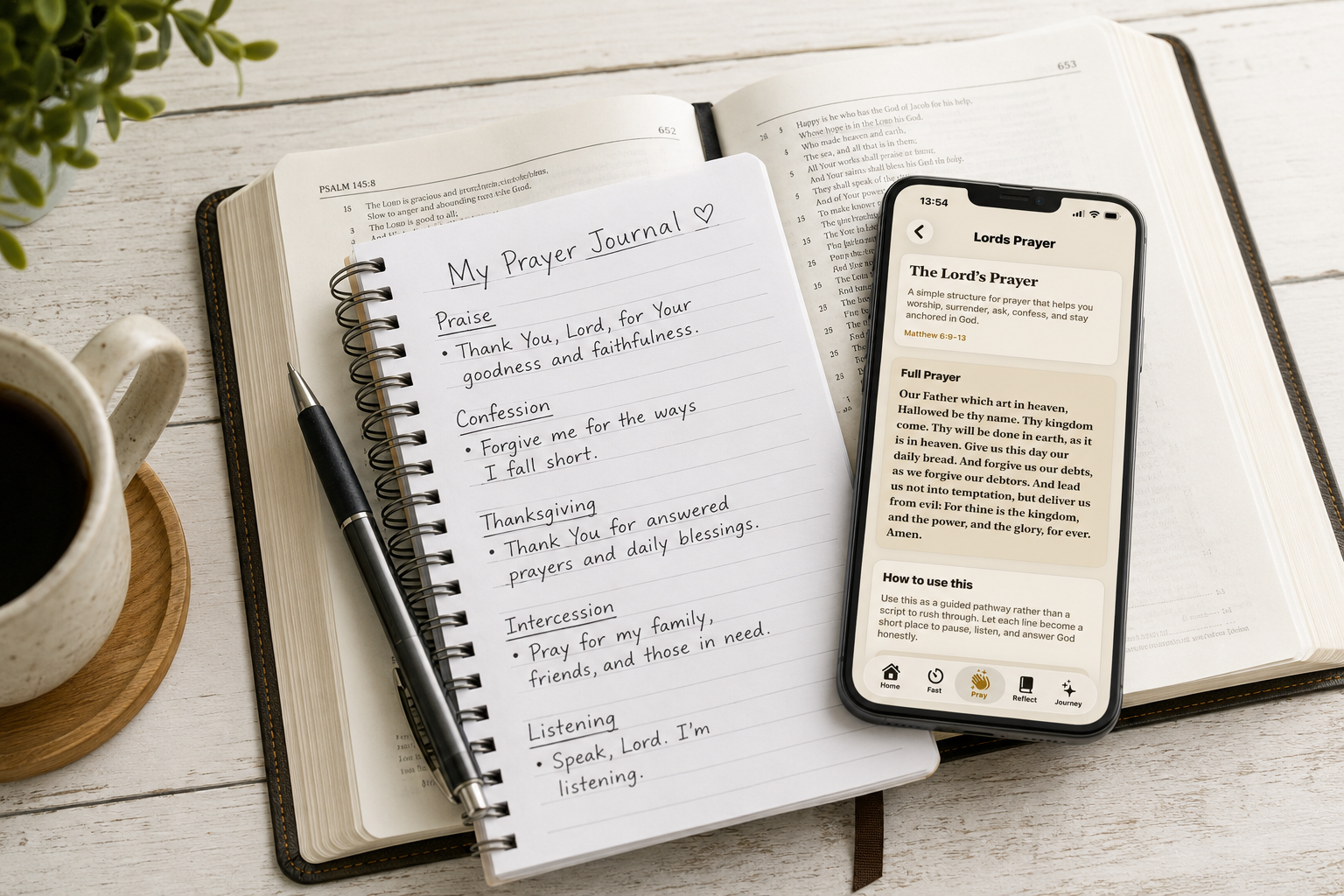
Prayer journaling during a fast is a simple way to turn hunger, distraction, and weakness into conversation with God. You do not need perfect words or a polished devotional routine. Keep a notebook, or a quiet digital space, and write short, honest prayers as your body reminds you that you are dependent. The goal is not to perform spirituality, but to pay attention to God with humility, secrecy, and trust, as Jesus teaches in Matthew 6:16-18.
This guide offers practical Christian fasting journal prompts for before, during, and after a fast. Use them gently. If a prompt helps, stay with it. If it makes you anxious or self-focused, set it aside and return to prayer.
Why Prayer Journaling Helps During a Fast
Fasting often reveals what usually hides beneath noise: impatience, fear, craving, resentment, boredom, or the wish to be in control. Journaling gives those discoveries somewhere faithful to go. Instead of scrolling, complaining, or measuring your fast, you can name what is happening before God.
A journal is not a scoreboard. It is more like an altar of attention. Psalm 63:1 gives language for longing: “O God, you are my God; earnestly I seek you.” Hunger can become a bell that calls you back to that desire.
Reflection note: If you are new to fasting, prepare practically and spiritually. The companion article How to Prepare for a Christian Fast can sit beside this one as a plain-language checklist.
Preparing the Heart Before the Fast
Before you begin, decide what kind of fast you are entering, what time period is wise, and what responsibilities still need your attention. Then write a brief intention. Keep it humble, specific, and free from bargaining with God.
You might write: “Father, I am setting aside this meal to seek you. Teach me to receive your love, notice my attachments, and pray for others.” This keeps the fast relational rather than dramatic.
Before you start, journal through these questions
- What am I seeking from God, without demanding an outcome?
- What distractions am I most likely to reach for when fasting feels hard?
- Who or what am I being invited to pray for with compassion?
- How will I practise secrecy, simplicity, and patience today?
If your fast feels tangled with anxiety, comparison, or pressure, pause. Christian fasting is never a way to earn God’s attention. The resource When Fasting Feels Hard may be a helpful next read.
Prompts for Hunger Moments
Hunger during a fast can be physical, emotional, social, or habitual. Sometimes you may simply need to acknowledge it and continue. Sometimes you may need to adjust or stop with wisdom. Journaling helps you discern rather than react.
Short prompts when hunger rises
- Lord, what am I reaching for right now besides you?
- What does this hunger reveal: need, habit, comfort, fear, or impatience?
- How can I receive this moment without resentment?
- Who is hungry, burdened, or weary, and how can I pray for them?
- What would it mean to depend on daily bread today?
A sample entry might be very brief: “I am hungry and irritable. I want relief more than prayer. Lord, meet me here. Turn my attention towards love.” That is enough. Honesty can be more prayerful than impressive language.
Prompts for Distraction, Restlessness, and Wandering Thoughts
Distraction is not always failure. It may be the place where God shows you what has been shaping your attention. When your mind wanders, do not punish yourself. Notice, write one sentence, and return.
Try these prompts
- What am I avoiding by staying busy?
- Which thought keeps returning, and can I offer it to God without fixing it immediately?
- What notification, conversation, or task is asking for more authority than it deserves?
- What is one small act of obedience available now?
- Can I sit quietly for two minutes and let God be enough?
Philippians 4:6-7 invites believers to bring requests to God with thanksgiving, receiving peace that guards the heart and mind. Journaling can slow that movement down: concern, request, thanks, surrender.
Prompts for Prayer and Scripture Reflection
During a fast, Scripture gives your journal sturdier words than your mood can provide. Choose a short passage and stay with it. You are not trying to produce insights; you are listening.
Matthew 6:16-18 can help examine motives. Psalm 63:1 can give voice to thirst for God. Isaiah 58 can widen fasting beyond private devotion into justice, mercy, and repaired relationships.
Scripture journaling prompts
- What word or phrase stands out, and why might it matter today?
- What does this passage reveal about God’s character before it reveals anything about me?
- Where do I feel invited to repent, receive, forgive, or serve?
- How does this Scripture shape what I pray for my church, family, neighbours, or enemies?
- What would obedience look like quietly, without announcing it?
If you need more language for intercession, the guide What to Pray During a Christian Fast can complement these prompts.
Prompts for Dependence and Surrender
Dependence is often where fasting becomes tender. You may notice limits in your energy, concentration, or patience. Rather than treating limits as interruptions, let them become reminders that you are a creature loved by God.
Gentle surrender prompts
- What am I trying to control today?
- Where do I need to receive grace instead of proving strength?
- What disappointment can I bring to God without editing it?
- How might weakness teach me compassion for another person?
- What simple sentence of trust can I repeat when I feel thin?
Try writing a breath prayer: “Lord Jesus, I receive your mercy.” Or, “Father, I depend on you.” Keep it plain enough to remember when your attention is low.
Prompts for Ending the Fast Well
The end of a fast deserves as much prayer as the beginning. It can be tempting to rush, celebrate loudly, or treat the fast as a finished project. Instead, close with gratitude and gentle reflection.
Closing reflection prompts
- What did I notice about God, myself, and my loves?
- Where was I surprised by grace?
- What do I need to confess, thank God for, or continue praying about?
- Who came to mind during this fast, and what loving action might follow?
- How can I return to ordinary meals with gratitude rather than indulgence or guilt?
If you are considering how to close the fast with care, How to Break a Christian Fast With Prayer and Wisdom is a useful companion.
How Fasting Companion Supports Prayerful Reflection
Fasting Companion is an iPhone-only Christian spiritual formation app designed to help you fast with prayer, reflection, and sustainable rhythms. It is not a diet app, productivity app, wellness platform, or performance tracker.
Use it as a quiet companion: set aside intentional fasting time, return to prayerful prompts, and build rhythms that are realistic for your season of life. The aim is not to guarantee spiritual outcomes, but to create space for attentive dependence.
Frequently Asked Questions
How long should I journal during a fast?
Five honest minutes can be enough. Write when you begin, when hunger or distraction rises, and when you end. Consistency matters less than sincerity.
What if journaling makes me more self-focused?
Shorten it. Move from analysis to prayer. Write one sentence about what you notice, then one sentence offering it to God.
Can I journal on my phone?
Yes, if it helps you remain prayerful. If your phone becomes a doorway to distraction, use paper or turn on settings that reduce interruptions.
What should I do if I break the fast early?
Do not spiral into shame. Pray honestly, receive mercy, and reflect on what happened. Wisdom, health, and love of neighbour matter more than finishing neatly.
A simple next step is to choose three prompts before you begin: one for hunger, one for distraction, and one for closing reflection. Write them somewhere easy to find. When the fast feels complicated, return to those questions, breathe slowly, and pray the next honest sentence before God with trust.
Fast with prayerful attention
If you want a gentle structure for Christian fasting, prayer, and reflection, download Fasting Companion on the App Store. Let your next fast become less about performance and more about honest dependence on God.