How to Prepare for a Christian Fast: Prayer, Purpose, and Practical Wisdom
If you are preparing for a Christian fast, start with three things: prayer, a clear purpose, and a realistic plan. Christian fasting is not about proving devotion, punishing the body, or creating a spiritual performance. It is a humble way of making space to seek God with greater attention. Good preparation helps you begin with peace instead of confusion. It also keeps your fast rooted in dependence on God rather than in pressure, guilt, or vague ambition.
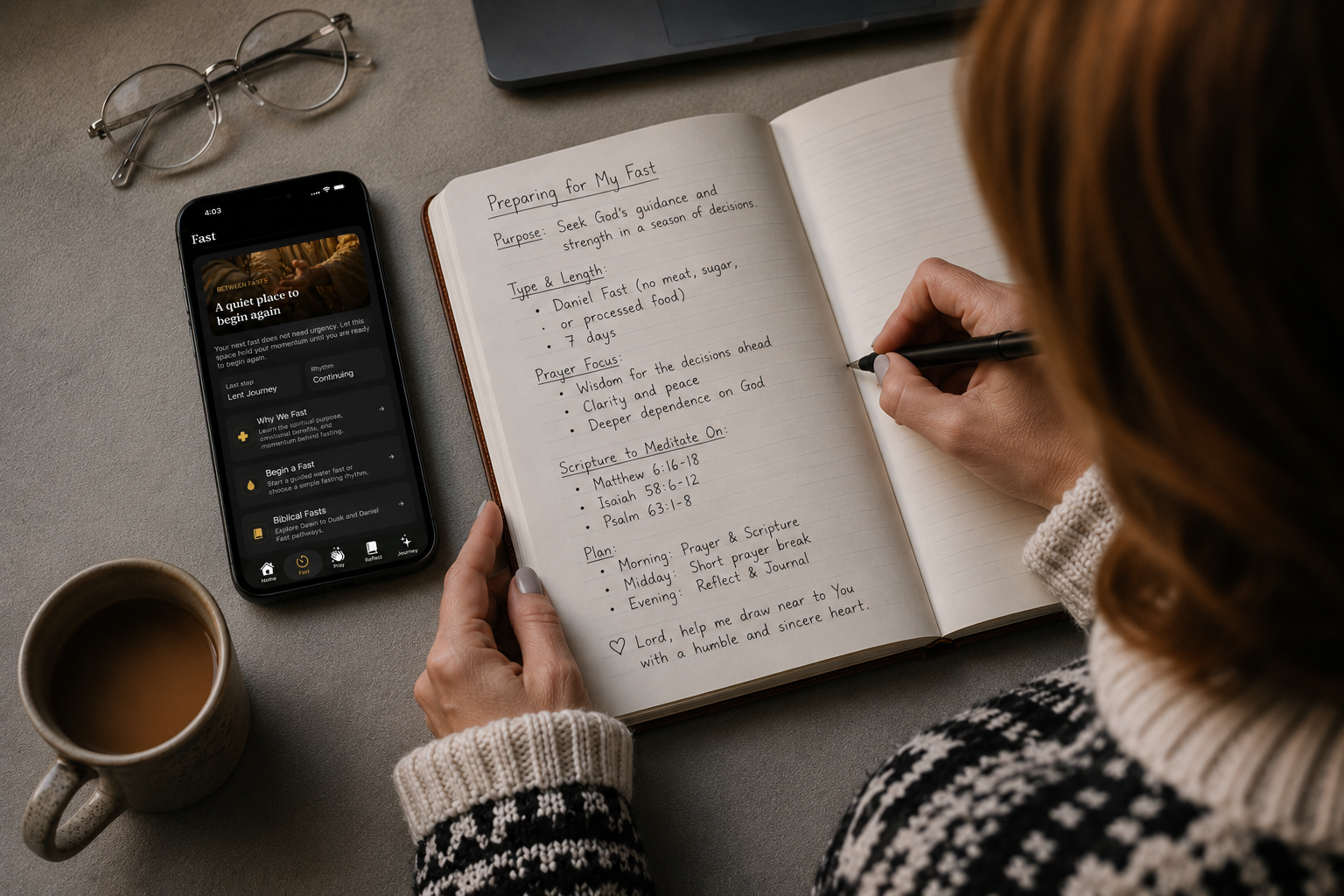
Before your fast begins, decide why you are fasting, what kind of fast you are choosing, how long it will last, and how you will use the time and attention you are giving up. Think through your schedule, responsibilities, and limits. Set simple prayer and Scripture plans. Tell only the people who need to know. Then begin quietly, asking the Lord for sincerity, steadiness, and grace.
What preparing for a Christian fast really means
Preparing for a fast means getting your heart, habits, and expectations in order before you begin. The goal is not to engineer a dramatic spiritual experience. The goal is to enter the fast honestly and attentively.
A Christian fast is a temporary, intentional setting aside of food, certain foods, or another normal good so that prayer, repentance, worship, and seeking God take clearer priority. Preparation matters because fasting tends to reveal what usually stays hidden: distraction, irritability, fear, pride, or deep hunger for God. A little preparation helps you meet those moments with prayer instead of surprise.
If you are new to this, you may also want to read How to Start Fasting as a Christian before deciding what your first fast should look like.
Clarify your purpose without becoming legalistic
One of the most important parts of preparation is naming your purpose. Without purpose, fasting can become a vague religious exercise. With too much rigidity, it can become legalistic. Aim for humble clarity.
Helpful reasons to fast
- To devote focused time to prayer
- To seek God about a decision or burden
- To practice repentance and renewed surrender
- To quiet appetites that have become spiritually loud
- To grow in dependence, not self-control for its own sake
Try writing one simple sentence before you begin: “I am entering this fast to seek God about ______ and to offer Him my attention with humility.” That sentence gives shape to your fast without turning it into a formula.
If you tend to be hard on yourself, read Fasting Without Legalism. It can help you keep your purpose clear while resisting shame, comparison, and rule-keeping for its own sake.
Choose the type and length of fast wisely
Not every Christian fast looks the same. Some people abstain from meals for a set time. Others give up certain foods. Some step away from media or another habitual comfort in order to create room for prayer. The right choice is the one that supports sincere seeking rather than dramatic appearance.
Questions to ask before choosing
- What kind of fast can I enter reverently and realistically?
- Will this choice create more room for prayer and attention to God?
- What responsibilities do I need to account for this week?
- Am I choosing this out of faith, pressure, or imitation?
If you are unsure what to set aside, What to Give Up for a Spiritual Fast may help you think through food and non-food options in a balanced way.
It is often wise for beginners to start smaller than they think they should. A shorter fast with prayerful focus is better than an ambitious plan that turns into frustration. Caution is also part of wisdom. Consider your personal condition, current demands, and whether this is a good time to begin. If you have concerns about fasting from food, seek appropriate guidance before starting.
Plan your prayer, Scripture, and reflection time
Fasting without prayer is mostly abstaining. Preparation should include a simple plan for how you will turn hunger, quiet, or interruption into attention to God. Keep the plan light enough to follow.
A simple pattern
Choose one or two short Scripture passages for the fast. Set one main prayer focus. Keep a notebook nearby for confession, gratitude, questions, and what you sense the Lord may be exposing in you. You do not need pages of material. You need a clear way to return to God when your mind drifts.
You may find it helpful to build around three prompts:
- Lord, what am I bringing to You?
- Lord, what are You uncovering in me?
- Lord, how do You want me to respond in trust and obedience?
If prayer is central to your purpose, spend time with Fasting and Prayer as part of your preparation.
Practical preparation checklist
A little practical planning can protect the tone of your fast. It helps you avoid beginning in chaos.
Consider your schedule, responsibilities, and likely challenges
Christian fasting happens in real life, not in a vacuum. Think through meetings, parenting, hospitality, travel, church commitments, and emotionally intense days. Preparation does not remove difficulty, but it helps you choose timing and boundaries wisely.
If your fast includes food, think through meal routines in advance. If your fast is from media, decide what counts and what exceptions are necessary for work or family. If you live with others, communicate simply and without spectacle. “I am setting aside this time to pray and fast this week” is enough.
You should also expect some resistance. Discomfort, distraction, and inner noise are common. That does not mean the fast is failing. It may mean it is revealing what normally controls your attention. When fasting feels heavier than expected, When Fasting Feels Hard can help you respond with grace rather than discouragement.
What to do the night before and the morning of the fast
The night before
End the day quietly if you can. Review your purpose. Read a short passage of Scripture. Pray a simple prayer of offering: “Lord, I give You this fast. Keep me sincere, teachable, and dependent.” Prepare any practical items you will need the next day, such as your Bible, journal, or adjusted schedule.
The morning of
Begin without drama. You do not need a special feeling to start well. Open in prayer, return to your purpose, and commit your attention to God for that day or that period. If you notice anxiety, pride, or self-consciousness, confess it early. A quiet beginning is often the best beginning.
FAQ
Should I tell other people I am fasting?
Usually only when it affects planning, meals, or shared responsibilities. Fasting is not meant to become an announcement.
What if I do not feel spiritual during the fast?
Feelings are not the measure of faithfulness. Stay prayerful, honest, and present before God.
Can I prepare for a fast even if I have failed before?
Yes. Many people return to fasting after discouraging experiences. Start simply, stay humble, and resist all-or-nothing thinking.
Preparing for a Christian fast is mostly about making room: room for prayer, repentance, listening, and renewed dependence on God. Keep your purpose clear, your plan simple, and your heart humble. Then begin, not trying to impress God, but ready to seek Him.
Need gentle support before and during your fast?
FastingCompanion is an iPhone app for Christians who want support centered on prayer, reflection, and spiritual intention before, during, and after fasting. You can also visit the Fasting Companion App page to learn more.