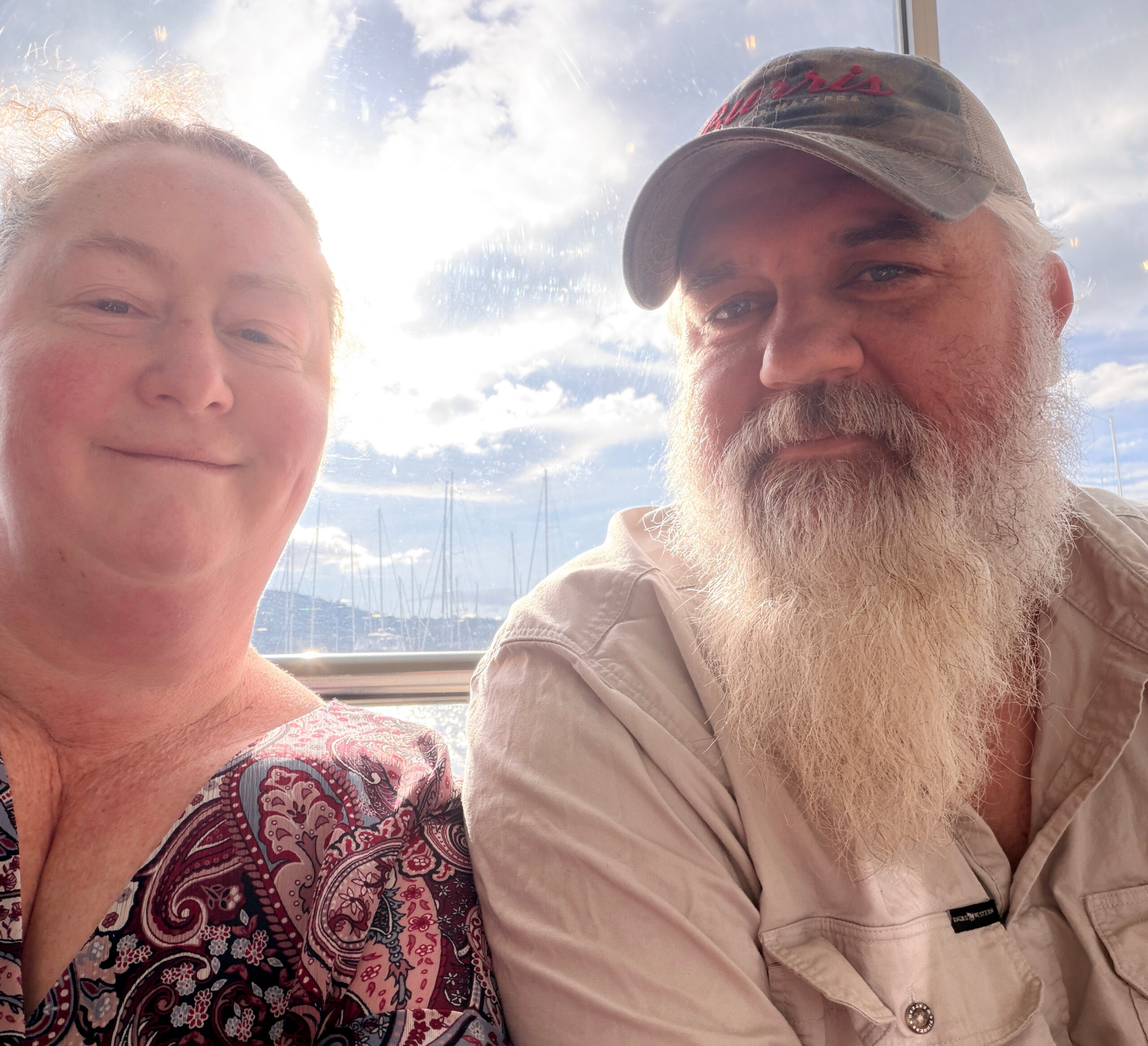
Bec’s Fasting Testimony
I’m 53 years old, have been a Christian most of my life, and up until the start of this year, had never really fasted.
Sure, I’d skipped some meals while trying to lose weight, and fasted as part of doctor’s instructions prior to a procedure. But I had never intentionally fasted with any regularity as part of my walk with God. And I wasn’t even sure I liked fasting – which meant I had become very good at finding excuses for why I shouldn’t fast.
Choosing To Begin
My husband, Rod has always been a bit more disciplined than me – in so many areas – but particularly when it comes to fasting. Whether he was fasting for health, or fasting as part of his own prayer life, or fasting as part of intercession for others, when he set his mind to something, he rarely deviated from course.
I wasn’t at all surprised when he said he wanted to fast for a week. But I think we were both surprised when I said I’d join him!
You see, God had been quietly convicting me for some time about my attitude to food.
Like many, I struggled with weight, but I knew my real issue went so much deeper than kilograms alone.
There are many scriptures that talk about our bodies and what we put into them. Proverbs 23:20 and 25:16, 1 Corinthians 3:16, 6:12 and 10:31. Philippians 3:18-19… Some of those are quite uncomfortable to read.
But when God chooses to reveal something to you, you only have two choices – ignore or obey!
There was a slight problem with the plan. I’d never fasted longer than 24 hours so a week seemed like an eternity. Rod graciously agreed to set the goal for 5 days but with the caveat that we’d ‘see how things went’.
I was painfully aware that I still had responsibilities. We still have a 9 year old at home, I look after a couple of grandkids during the week, and one of my roles in our farm business is to make lunches for our staff. Almost all of these revolve around food – and there was no getting away from that.
Yet I was buoyed by Philippians 4:13 that I could do even these difficult things with Jesus on my side.
Imperfect motives
In hindsight, I can see that even in obedience, my motivations were still a little off. That first fast was more of an extreme diet with a spiritual overlay. My goal was more ‘how much weight can I lose’ than ‘how can I grow closer to God’. Thankfully, imperfect people doing imperfect things is a pretty strong theme throughout the Bible, and God is more than able to use our imperfections for His glory.
In truth, even a weight loss goal was a start that God could use.
That first fast was far from perfect. The hunger pangs were all too real. I felt weak, drained, irritated… My willpower was severely tested.
But I made it through the first 24 hours without dying or spontaneously combusting, and then the next, and then the next.
I was less hungry on the third day than I’d been on the first. I was also pretty happy with the scales, dropping 5 kilograms in 3 days.
And, while all of these things were positives, we decided that 3.5 days was a good place to prayerfully end and actually share a meal with our daughter who had eaten alone all week.
Developing a fasting rhythm
Over the next few months, we developed a rhythm of fasting that grew into a weekly habit. The more we fasted, the easier it became, or more accurately, I just developed some much needed self-control.
But inside, I felt this growing tension that sat uncomfortably in me.
I had dropped 15 kilograms (about 33 pounds) and I felt physically better than I had in a long time. Most people had even noticed the weight and wanted to know how I was doing it.
Which brought up another uncomfortable moment. Wasn’t fasting supposed to be private? Should I tell them how I did it? And, if I did, was I fasting for God, or just to lose weight?
That internal monologue became a dialogue, with God weighing in (intentional pun) on my obsession with the scales, and gently encouraging me to take a break from the daily weigh ins.
The App That Changed The Focus
Around the same time, Rod started creating a new fasting app, as the ones we used were primarily focused on health and weight metrics. Rod had gone searching for something that matched his spiritual intention in the fast, and not finding anything suitable, he decided to create his own.
His desire was to create something that would actually guide people through the act of fasting, give them spiritual support during their struggles, and help them pursue a journey of spiritual transformation.
That concept really resonated with me, as it was exactly what I needed to shift my fasting from physical into a spiritual fast.
That night, I downloaded a test version of the app to my phone, deleted my health trackers and made a quiet commitment with God that I would put more focus on the spiritual outcomes of my fast and less on the physical outcomes.
As a result, my focus shifted from fasting for weight loss, to fasting as a way to connect with God – to make room for Him in my daily life. I started researching Biblical fasts, read scriptures about fasting, and explored the rich fasting culture of Jewish, Orthodox and Catholic faiths.
When I stopped focusing on the external benefits of fasting, I began to notice the internal changes – what God was doing within me, how He was changing my heart as surely as the lack of calories had changed my body.
Looking Back Without Condemnation
Yes, fasting still has a physical benefit.
There’s a reason the medical world has become obsessed with fasting. From autophagy to weight loss to reversing chronic inflammation, fasting has amazing health benefits.
But much more than that, fasting is a Biblical principal, one that has been practiced for thousands of years.
Moses fasted 3500 years ago. In obedience to God, he instructed the Israelites to fast. They were still fasting regularly when Jesus taught the disciples about fasting 2000 years ago. And Christians have continued fasting ever since.
It wasn’t until the 1940s that science caught up with religion, and started to recognise the physical benefits of an ancient tradition.
There was a time when I felt condemned about those first few fasts. I felt ashamed that my focus was on the physical benefits of fasting rather than the spiritual.
But then I am reminded of Romans 8:1 – that there is no condemnation to those who are in Christ Jesus.
God wasn’t angry at me that I started fasting for weight loss. He didn’t expect me to stay fat while I starved for Him and denied myself food.
God was able to use my human motivation to meet me in the middle and remind me that He cares about my whole being – mind, body, and spirit!
I also cannot escape the simple fact that God designed the human body. He commanded us to fast. So surely, He knew how good it was for our physical health.
God can use our human desires to gently convict and prompt us into change. The key is not to let our human nature lead us down a path of self-improvement, but to let God change us from the inside out.
What Others Can Learn From Bec’s Story
Bec’s testimony is personal, but it also gives other Christians a practical way to reflect on their own fasting. The goal is not to copy the exact length of her fast, her food choices, or her health goals. The deeper invitation is to notice what fasting reveals, what God may be gently addressing, and where a fast needs to become more prayerful than measurable.
1. You can begin even when your motives are mixed
Bec is honest that her first motivation was weight loss. That honesty matters. Many people begin fasting with imperfect motives, uncertainty, or fear. Her story does not celebrate self-improvement as the goal; it shows that God can meet someone at the beginning and keep drawing the fast toward Him.
Reflection point: Before you begin, ask, ‘What do I hope this fast will change in me?’ Then ask, ‘What might God want to show me beyond that?‘
2. A realistic fast can be wiser than an impressive fast
Bec negotiated the first fast down from seven days to four because she wanted to finish faithfully rather than overreach. That is a helpful pattern for beginners. A fast does not become more spiritual simply because it sounds more dramatic.
Tip: Choose a fasting rhythm you can enter prayerfully, safely, and without turning the rest of your life into chaos. If food fasting may affect your health, speak with a qualified medical professional first.
3. Fasting can reveal what has been quietly leading you
For Bec, fasting exposed two forms of control: food itself and then the scale. The issue was not only what she was eating or not eating. It was the amount of attention, emotion, and authority those things had gained in her life.
Reflection point: During a fast, notice what occupies your thoughts. Is it hunger, the clock, the number on the scale, approval from others, or the desire to prove something?
4. Health tracking is not the same as spiritual formation
Bec’s turning point came when Rod explained that many fasting apps only cover the physical side. Fasting Companion was designed to help Christians connect fasting with prayer, Scripture, reflection, and spiritual intention before, during, and after a fast.
5. The people around you are part of the fast
Bec and Rod ended their first fast at 3.5 days partly because their daughter needed their time. That is a quiet but important lesson. Fasting should not become an excuse to neglect love, patience, family, work, or wisdom.
Tip: Plan your fast around the people who will be affected by it. Decide ahead of time how you will cook, serve, rest, pray, and stay present.
6. Replace measurement with prayerful reflection
When Bec stopped stepping on the scales, she created space to notice what God was doing internally. That is one of the most valuable shifts a Christian faster can make: from constant measuring to deeper listening.
Reflection prompts:
- What am I tempted to measure during this fast?
- What would it look like to give that attention back to God?
- What is God showing me about dependence, discipline, humility, or desire?
- Where do I need grace rather than condemnation?
7. No condemnation does not mean no conviction
Bec’s closing reflection is especially useful: she did not need to condemn herself for beginning with weight-loss motives, but she also did not need to stay there. Romans 8:1 gave her freedom from shame, while God’s conviction still invited her into deeper change.
That balance is central to healthy Christian fasting. Fasting is not about pressure, performance, or proving devotion. It is a way of creating space for God to work in the whole person – mind, body, and spirit.
A Gentle Next Step
If you are considering a fast, begin with prayer rather than pressure. Ask God what kind of fast would help you seek Him with renewed attention. Choose a rhythm that is wise for your body and season of life. Then use the fast as a time to notice what God is revealing, not just what your body is doing.
Fasting Companion is an iPhone app designed to support that kind of fasting: prayerful, reflective, Scripture-aware, and spiritually intentional.
Do You Have a Testimony to Share?
Every testimony is a reminder that God is still at work today.
Whether you have experienced answered prayer, spiritual growth through fasting, healing, guidance, restoration, or a deeper relationship with Christ, we would love to hear your story and how God has been faithful in your life.
Your testimony may encourage someone else to trust God, persevere in prayer, begin fasting for the first time, or take their next step of faith.