Fasting Without Legalism: Prayer, Humility, and Grace
Christian fasting without legalism means choosing temporary self-denial to seek God more attentively, while refusing to treat the fast as a badge of holiness, a way to control God, or a standard for judging yourself or others. In Scripture, fasting is meant to deepen prayer, awaken humility, and make room for repentance, dependence, and love. It becomes legalistic when the focus shifts from God’s grace to performance, comparison, fear, pride, or rigid rule-keeping.
For many Christians, the tension is real. You want to fast sincerely, but you do not want to turn it into a spiritual achievement project. You may wonder whether you are doing enough, whether shorter fasts “count,” or whether stopping early means failure. The good news is that biblical fasting is not about proving your worth. It is about making space to seek God honestly. If you are new to the practice, you may also find it helpful to read why Christians fast and how fasting and prayer belong together.
What fasting is, and what legalism is not
At its simplest, fasting is a voluntary setting aside of food for a time in order to give greater attention to God. Christians may also abstain from other comforts or habits, but biblical fasting most often refers to food. The point is not deprivation for its own sake. The point is reorientation: hunger becomes a prompt to pray, listen, repent, worship, and remember your need for God.
Legalism, by contrast, treats spiritual practices as a way to earn standing, manage guilt, impress others, or create a measurable ladder of righteousness. In a legalistic mindset, fasting becomes less about communion with God and more about control: control over yourself, over outcomes, or over how spiritual you appear. It can also show up as suspicion and judgment toward people who fast differently or not at all.
Signs your fasting is staying healthy
- You are fasting to seek God, not to prove something.
- You are praying more, not merely eating less.
- You remain teachable, gentle, and honest about your limits.
- You do not use your practice to compare yourself with others.
- You can break or adjust the fast without spiraling into shame.
Signs fasting may be drifting into legalism
- You feel spiritually superior when you fast well.
- You feel spiritually worthless when you struggle.
- You are more focused on rules than on prayer.
- You hide resentment under the language of discipline.
- You expect fasting to force God’s hand.
Why prayer, humility, and grace must stay at the center
Prayer keeps fasting relational. Without prayer, fasting can become little more than going without food. With prayer, the emptiness has direction. Every hunger pang can become a cue: “Lord, I need You.” Every mealtime can become a deliberate pause for Scripture, confession, intercession, or quiet dependence. If you need help building that rhythm, this guide on fasting and prayer can support a more intentional practice.
Humility keeps fasting truthful. Fasting reveals weakness quickly. That is not a problem to hide; it is often part of the gift. Hunger exposes irritability, self-reliance, distraction, and emotional dependence on comfort. A humble fast does not pretend these things are absent. It brings them into the light and asks God for mercy. In that sense, fasting is not proof that you are strong. It is one way of learning that you are needy.
Grace keeps fasting from becoming harsh. Grace reminds you that God’s love is not increased by your empty stomach and not threatened by your imperfect follow-through. Grace lets you begin simply, fail honestly, and continue gently. It also protects you from treating fasting like a bargain: “If I deny myself enough, God must answer me.” Instead, grace says, “I come because I need God, and He is good.” That posture echoes the deeper lesson of fasting as dependence on God.
A simple way to fast without turning it into performance
Set a quiet intention, connect each missed meal to prayer, and let the fast make you softer before God and others, not harder.
Biblical context: Isaiah 58 and Jesus’ teaching in Matthew 6
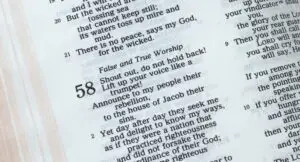
The Bible gives a strong corrective to empty fasting. In Isaiah 58, God confronts people who are outwardly fasting while continuing in self-centeredness and injustice. The issue is not that fasting itself is wrong. The issue is that ritual without repentance is hollow. A fast that leaves you more religious but not more merciful has missed the point. That is why Isaiah’s picture of true fasting includes humility, justice, and practical love toward others. For a fuller reflection, see Isaiah 58 and the kind of fasting God desires.
Jesus gives another essential safeguard in Matthew 6. He assumes that His followers may fast, but He warns against doing it to be noticed. His concern is not merely public attention. It is the deeper temptation to make devotion into theater. Jesus redirects fasting away from display and back toward the Father who sees in secret. That means secrecy is not a gimmick either. It is a way of protecting sincerity.
Taken together, these passages offer a practical test. If your fasting is drawing you toward hidden prayer, repentance, generosity, and a softer heart, it is moving in a healthy biblical direction. If it is making you preoccupied with image, strictness, or spiritual status, it is time to stop and recalibrate.
How to practice fasting sincerely
1. Begin with a clear, modest intention
Before you fast, answer one simple question: why am I doing this before God? Your purpose does not need to sound dramatic. You might be seeking focus in prayer, bringing repentance before God, preparing for a decision, grieving, or simply learning dependence. Clear intention helps prevent vague, performative fasting.
2. Choose a form that supports prayer
A shorter or simpler fast can be deeply meaningful. Missing one meal with focused prayer may be more spiritually honest than attempting a long fast driven by pressure. If you are unsure where to begin, this gentle beginner’s guide offers practical starting points.
3. Plan what you will do instead of eating
Do not just remove food; replace the time and attention with prayer, Scripture, silence, journaling, or intercession. Otherwise, fasting can collapse into distraction and irritability.
4. Keep the posture gentle and honest
If weakness rises, let it teach you. If motives become mixed, confess them. If you need to break the fast, do so gratefully rather than dramatically. God is not grading your pain tolerance.
5. Let fasting increase love
A faithful fast should not make you colder, more severe, or less attentive to people around you. It should lead toward compassion, generosity, patience, and humility in ordinary relationships.
Common edge cases and honest questions
What if I break the fast early?
Breaking a fast early is not automatically failure. Sometimes it reveals unrealistic expectations, mixed motives, or a genuine need for wisdom. Respond without self-condemnation. Reflect, pray, and learn.
What if I feel proud while fasting?
Notice it quickly and bring it to God. Pride does not mean the whole practice is ruined, but it does mean your heart needs re-centering. Fasting can expose pride precisely so it can be confessed.
What if I feel nothing spiritual at all?
Not every fast feels intense or dramatic. Faithfulness is not measured by emotional intensity. Keep prayer simple and sincere. God is not absent just because the experience feels quiet.
Should I tell anyone?
Usually, secrecy protects sincerity. Still, there may be practical reasons to tell a spouse, household member, pastor, or close friend. The key question is whether sharing supports wisdom or feeds image management.
Is fasting required for every Christian?
Christians should not treat fasting as a universal scoreboard. It is a historic and meaningful practice, but not a tool for ranking maturity. Some believers may fast regularly; others may enter the practice slowly and carefully.
There is also a wise health caution here. If you are pregnant, nursing, managing a medical condition, taking medication, have a history of disordered eating, or have any reason to think food abstinence may be unwise, seek appropriate medical guidance and consider non-food forms of fasting. Spiritual sincerity is not measured by ignoring limitations.
FAQ
Can fasting become legalistic even if my intention started well?
Yes. Motives can drift during a fast. That is why regular self-examination matters. Return often to prayer, humility, and grace.
Does a shorter fast still matter spiritually?
Yes. The value of fasting is not proved by length alone. A brief, prayerful fast can be more sincere than a longer fast driven by pressure or pride.
How do I know if fasting is drawing me closer to God?
Look for fruit such as honesty, dependence, repentance, compassion, and increased attentiveness in prayer, not just endurance.
Summary and next step
Fasting without legalism is possible when you remember what fasting is for. It is not a test of spiritual worth, a public performance, or a way to control God. It is a voluntary, grace-shaped practice that creates room for prayer, humility, repentance, dependence, and love. Isaiah 58 warns against outward fasting without inward mercy. Jesus’ teaching in Matthew 6 warns against fasting for human attention. Together, they point toward sincere devotion before God.
If you want help keeping your fast prayerful and intentional, the Fasting Companion iPhone app is designed to support reflection, Scripture, prayer, and spiritual focus rather than performance or tracking for its own sake.