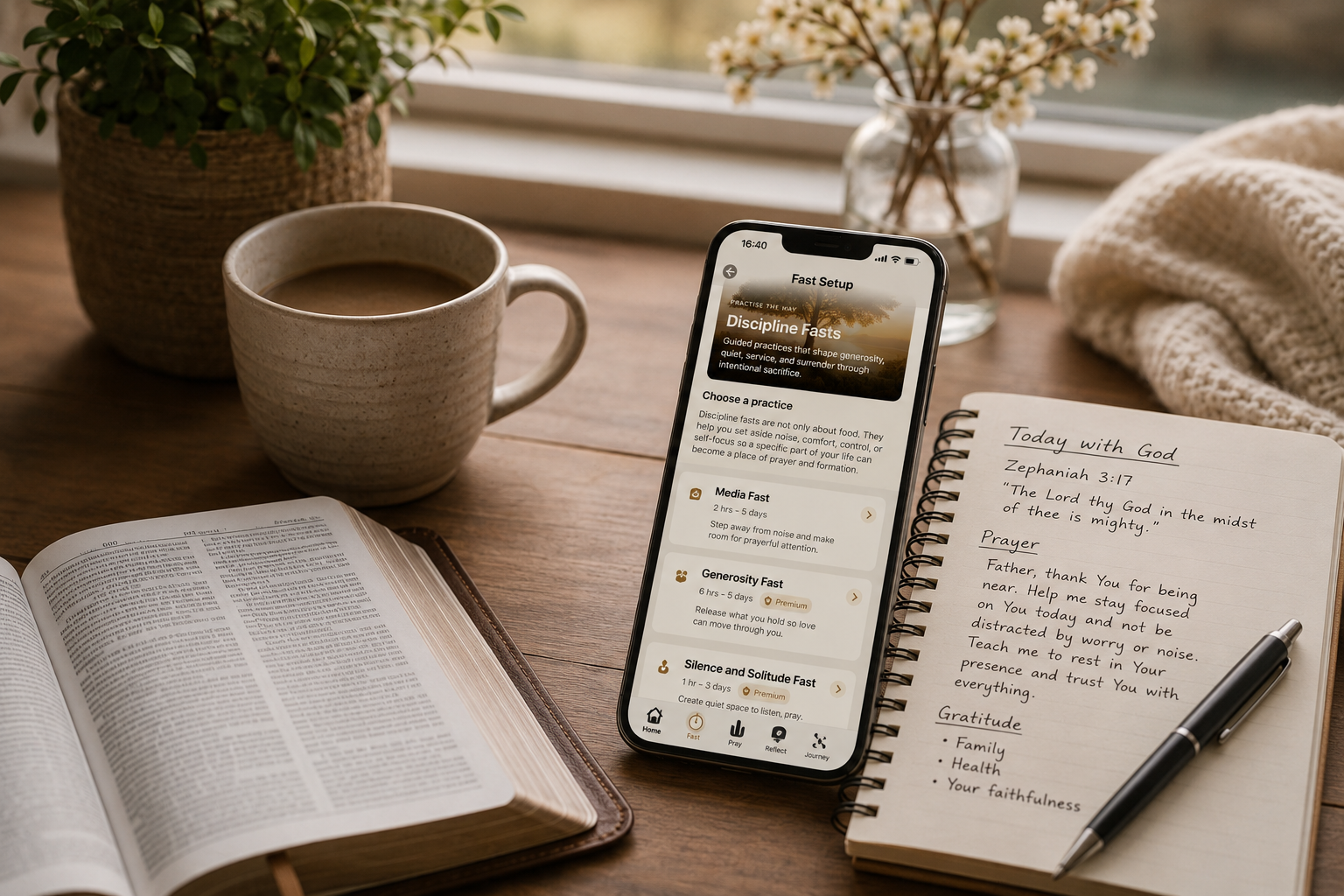
What to Give Up for a Spiritual Fast: A Gentle Christian Guide
What should you give up for a spiritual fast? In most cases, give up something that regularly fills your attention, comforts you automatically, or dulls your hunger for God. A wise Christian fast is not about choosing the hardest possible rule. It is about removing something meaningful enough to create room for prayer, Scripture, repentance, worship, and a more attentive life with the Lord.
If you are just beginning, start smaller than you think. A gentle, intentional fast often bears more fruit than a dramatic plan you cannot sustain. If fasting from food raises health concerns, or if you are pregnant, on medication, have a history of disordered eating, or carry serious medical concerns, seek appropriate medical and pastoral guidance before choosing your fast.
For a broader foundation, you may also find fasting and prayer and how to start fasting as a Christian helpful.
What a spiritual fast is really for
A spiritual fast is a voluntary act of self-denial for the sake of seeking God more attentively. In Christian practice, fasting is not mainly about proving discipline, improving your image, or copying someone else’s tradition. It is a way of saying, “Lord, I want You more than I want my usual comforts.”
That means the question is not only, “What can I stop doing?” but also, “What space will this create?” If giving something up does not lead you toward prayer, Scripture, confession, worship, or quiet dependence on God, it may be more like a challenge than a fast.
Biblical fasting is often tied to humility, repentance, prayer, grief, guidance, or renewed dependence on God. In the church calendar, many Christians especially think about this during Lent, but a spiritual fast can also happen during an ordinary week, before a major decision, in a time of spiritual dryness, or during a personal season of prayer. If you want context for seasonal fasting, see what Lent is and how Christians approach fasting and prayer.
Food fasts, non-food fasts, and distraction fasts
Christians use the phrase “give something up” in different ways, so it helps to make a few distinctions.
Food fasts
A food fast means abstaining from food entirely for a period of time, from a particular meal, or from certain foods. Examples include skipping one meal for prayer, avoiding desserts for a season, or keeping a simpler menu. Food fasts are often the most traditional form of fasting because physical hunger can become a clear prompt to pray.
Non-food fasts
A non-food fast means giving up something other than food in order to seek God more intentionally. This may include social media, streaming, gaming, unnecessary shopping, alcohol, podcasts, or constant background entertainment. These fasts can be especially wise for people whose greatest spiritual distraction is not food but noise, convenience, speed, or screen dependence.
Habit or distraction fasts
Some fasts focus less on a specific item and more on a recurring pattern that pulls your heart away from God. Examples include fasting from complaining, gossip, impulsive online browsing, doomscrolling, late-night phone use, or filling every quiet moment with stimulation. These can be powerful because they address not just consumption, but formation.
You can read more about this in non-food fasts and why biblical fasting is not only about abstaining from food.
How to choose what to give up
The best spiritual fast is personal, prayerful, and honest. Use this checklist to choose wisely:
- Choose something meaningful. If giving it up changes nothing, it may not create real spiritual space.
- Choose something realistic. A sustainable fast is usually better than an extreme one.
- Choose something connected to your spiritual need. If distraction is your issue, a screen fast may help more than skipping coffee.
- Plan the replacement. Decide when you will pray, read Scripture, journal, or sit in silence during the space your fast opens.
- Keep the focus on God, not performance. The point is not to impress anyone, including yourself.
- Consider your season of life. Parenting, caregiving, demanding work, and health limitations may shape what is wise.
- Seek help when needed. If the fast touches health, medication, pregnancy, mental health, eating disorder history, or serious concerns, ask for medical or pastoral guidance.
Examples of what to give up for a spiritual fast
Notice that these examples vary. Some are traditional, some are practical, and some go straight to a habit of the heart. That is often how discernment works. The right fast is the one that honestly meets you where you are.
Practical guidance for beginners and common edge cases
If you are new to fasting
Start with one clear commitment. You might give up lunch once a week, desserts for a week, or social media after dinner. Pair it with one simple spiritual practice: a psalm, ten minutes of prayer, a written confession, or a short evening reflection.
If food fasting is not wise for you
You are not failing if you choose a non-food fast. A faithful fast can still involve real sacrifice and sincere devotion. For many people, a fast from digital noise or convenience reveals just as much dependency as a fast from food.
If your fast becomes performative
If you find yourself becoming proud, irritable, or obsessed with the rule itself, pause and re-center. Christian fasting should increase humility, not self-importance. If needed, simplify the fast and ask God for a cleaner motive.
If fasting feels hard
Difficulty is not always a sign to quit, but it can be a sign to pay attention. Hunger, restlessness, silence, or boredom often expose what we rely on. Let that exposure become prayer. If you need help discerning whether to continue, adjust, or stop, read when fasting feels hard: pause, pray, and practice wisdom.
Source and context note
This guidance reflects broad biblical fasting principles commonly recognized across Christian traditions: fasting is meant to deepen prayer, humility, repentance, dependence, and attentiveness to God. It is not meant to be empty ritual or self-punishment. In Lent and other seasonal practices, Christians often give up something familiar not because the item itself is always wrong, but because surrender can help make room for spiritual renewal.
Frequently asked questions
What is the best thing to give up for a spiritual fast?
The best thing to give up is something that genuinely competes for your attention or comfort and can be prayerfully replaced with time with God. For one person that may be a meal; for another, social media or constant entertainment.
Do I have to fast from food for it to count?
No. Food fasting is historic and meaningful, but a non-food fast can still be sincere and spiritually fruitful, especially when health or life circumstances make food fasting unwise.
How long should a spiritual fast last?
It depends on your purpose and capacity. Some people fast for part of a day, one day a week, a set number of days, or a whole church season such as Lent. The important thing is intentionality, not impressiveness.
What should I do instead of the thing I give up?
Replace it with prayer, Scripture reading, silence, worship, confession, journaling, or acts of mercy. Fasting is most helpful when subtraction leads to spiritual attention, not just an empty gap.
Choose a fast that creates space for God
In summary: give up something meaningful, sustainable, and spiritually relevant, then use that space for prayer and reflection. If you want gentle support for setting intention, prayer prompts, and daily reflection, try the Fasting Companion app.