Family-Friendly Non-Food Fasts: A Gentle Christian Guide for Homes and Small Groups
For many Christian families, the word fasting can feel intimidating. Parents may want to teach spiritual attentiveness without pressuring children, and small-group leaders may want a shared practice that makes room for prayer without turning into performance. That is why family-friendly non-food fasts can be such a wise starting point: they are simple, relational, and centered on making space for God rather than tracking sacrifice.
Fasting Companion approaches fasting as spiritual formation, not fitness tracking. In homes and groups, that matters. A gentle fast is not about proving devotion, controlling behavior, or creating a more efficient household. It is about temporarily setting aside something normal and good so attention can be redirected toward prayer, Scripture, repentance, gratitude, listening, and love.
Direct answer: A family-friendly non-food fast is a temporary, voluntary pause from a normal activity such as entertainment, social media, noise, shopping, or hurry so a household or small group can focus more intentionally on prayer and God’s presence. For children, youth, and vulnerable people, non-food fasts are usually the safer Christian option because they avoid meal-skipping while still teaching surrender, attention, and dependence on the Lord.
What is a non-food fast, and what makes it family-friendly?
A non-food fast is a spiritual practice in which a person or group temporarily gives up something other than food for a defined period of time. It might mean an evening without screens, a week without background media, or a day without unnecessary spending. The goal is not deprivation for its own sake. The goal is to notice what fills our attention and then offer that space back to God.
A family-friendly spiritual fast is shaped by gentleness, clarity, and consent. It respects age, health, maturity, and household realities. It does not require children to skip meals, and it does not treat fasting as a test of seriousness. Instead, it invites everyone to participate in an appropriate way.
What it is not
A family-friendly fast is not punishment, screen-time policing, or behavior management dressed up in spiritual language. If a parent says, “We are fasting TV because you have been difficult,” that is not fasting. If a group leader uses fasting to pressure participation or measure commitment, that also misses the point. Christian fasting is an offering to God, not a leverage tool over other people.
If you want a broader biblical framework, this article on non-food fasts and biblical fasting can help clarify why abstaining from food is not the only faithful form of fasting.
Why non-food fasts work well in homes and small groups
Non-food fasts fit family life because they can be adapted without strain. A household with toddlers, teens, shift work, school demands, or mixed spiritual maturity can still practice a short, meaningful fast together. Small groups can do the same without assuming everyone shares the same health situation, church tradition, or comfort level.
They also make the hidden purpose of fasting easier to see. When a family pauses streaming for one evening and uses that time for prayer, conversation, and Scripture, the replacement is visible. When a small group chooses a day of reduced phone use and gathers to pray, the connection between abstaining and seeking God becomes concrete.
Tip: Name the purpose before the practice. “We are setting this aside so we can pay better attention to God and one another” is much clearer than “We are giving this up because Christians should fast.”
A practical checklist for a gentle Christian fast
1. Choose a shared purpose
Start with one simple intention. Are you seeking more peace in the home, praying for a child, preparing for Easter, discerning a decision, or asking God to renew your group? A shared purpose keeps the fast from becoming random or performative.
2. Choose what to pause
Pick one normal activity that is meaningful but not harmful to set aside. Good candidates include social media, television, gaming, background music, online shopping, sweets for adults only, unnecessary noise, or multitasking during meals.
3. Choose what to replace it with
This is where the fast becomes prayer-centered. Replace the paused activity with a short Scripture reading, a family prayer, silence, journaling, worship, neighborly service, or a conversation prompt. Without replacement, a fast often becomes empty frustration.
4. Set a clear time boundary
Decide whether the fast lasts one hour, one evening, one day, or one week. Short and clear is usually better than vague and ambitious, especially for families. A defined beginning and end helps everyone relax into the practice.
5. Keep participation voluntary
Adults can lead, invite, and model, but they should not coerce. Children may participate differently based on age. In small groups, make room for conscience and circumstance. Shared encouragement is healthy; pressure is not.
6. Close with reflection
At the end, ask what surfaced. What did people miss? What felt freeing? What did God bring to attention? Reflection helps the practice become formation rather than mere interruption.
10 family-friendly non-food fast ideas with prayerful replacements
- Evening TV fast: Replace with one Psalm, brief prayer, and shared conversation.
- Social media fast for adults or teens who choose it: Replace with written prayers for friends and concerns.
- Gaming fast for a set window: Replace with a board game, gratitude prayers, or serving someone at home.
- Background noise fast: Turn off constant media and practice five minutes of silence before prayer.
- Online shopping fast: Replace browsing with generosity planning or prayer for contentment.
- Complaining fast: When tempted to complain, pause and offer a short prayer of dependence.
- Busy-schedule fast: Protect one unhurried evening for rest, Scripture, and conversation.
- Phone-at-the-table fast: Replace distraction with attentive listening and a simple table blessing.
- Self-promotion fast: In a group chat or gathering, speak less about self and pray more for others.
- Noise and rush fast on a Saturday morning: Begin the day slowly with prayer, journaling, and a walk.
For readers especially considering devices, digital fasting for Christians offers more specific guidance on turning less screen time into more prayer.
How to practice this well at home
In a household, simplicity usually wins. Explain the fast in one sentence, keep the time frame realistic, and give children a concrete replacement practice. For example, “Tonight we are turning off screens after dinner so we can read a Gospel story, pray for two people, and listen to each other.”
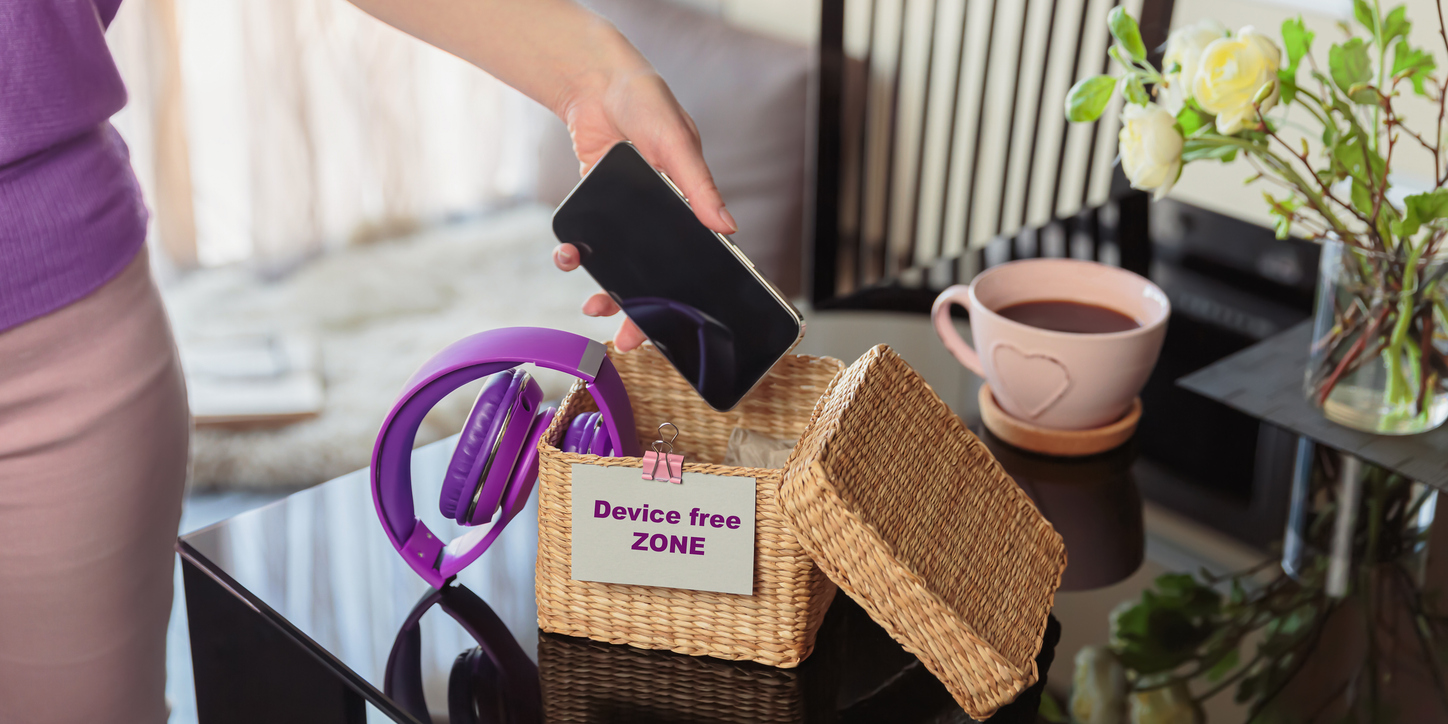
Younger children often respond best to visible actions: lighting a candle at prayer time, drawing prayers, placing phones in a basket, or taking a quiet walk. Older children and teens may appreciate being invited into the planning. Ask what distraction they notice in themselves and what replacement would feel meaningful rather than forced.
Parents should also model humility. If the fast reveals irritability, dependency, or exhaustion, name that honestly. “I did not realize how much I reach for my phone when I feel tired” is a more powerful lesson than acting unfazed.
How to lead a non-food fast in a small group
For small groups, begin with invitation, not assumption. Explain the purpose, define the practice, and state clearly that participation is voluntary. A group might agree to one shared fast between meetings, such as pausing social media one evening or fasting from entertainment for twenty-four hours, then discussing what God exposed or encouraged.
It helps to give one replacement rhythm for everyone. That might be a short prayer at noon, one Scripture reading in the evening, or a reflection question before bed. Shared rhythm creates unity without requiring identical circumstances.
Leaders should avoid spiritual comparison. Some members will engage deeply; others may forget, hesitate, or adapt. That is normal. If you are guiding a broader church setting, how to lead a church fast without pressure gives a helpful framework that also applies to homes and groups.
Safety boundaries for children, youth, and vulnerable people
Children should not be pressured to skip meals in the name of spiritual growth. The same caution applies to pregnant people, people with medical conditions, people who rely on medications that require food, and anyone with a history of disordered eating. In these situations, non-food fasts are often the wiser path. When questions remain, seek pastoral and qualified medical guidance. You can also read when not to fast from food.
Even with non-food fasts, the tone matters. Keep practices age-appropriate, short, and relational. Do not present the fast as a measure of holiness. If a child becomes anxious or confused, simplify further. The fruit to look for is not strain but attentiveness, tenderness, honesty, and prayer.
Using Fasting Companion as an adult support tool
Adults in the home or group can use Fasting Companion on iPhone as a quiet support for the process. It can help you set the shared intention, keep reflection prompts nearby, and review what God brought to attention during the fast. Used that way, the app supports adult discernment and prayer without turning the family practice into a managed system.
If you want to deepen the prayer side of the practice, fasting and prayer is a helpful companion resource.
Start simple, and keep the focus on God
Use Fasting Companion on iPhone to set an intention, keep prayer prompts close, and reflect on what surfaced during your family or small-group fast.
Summary and next step
- Non-food fasts help families and groups make room for prayer without centering meals.
- A healthy fast is voluntary, time-bound, and paired with a clear replacement practice.
- For children and vulnerable people, non-food fasts are usually the safer Christian option.
- The point is not control or performance but attention, surrender, and love.
- Simple rhythms often work best: one purpose, one pause, one prayerful replacement.
Christian families and groups vary in tradition, so this article offers practical formation ideas rather than a binding rule. The next faithful step is usually a small one: choose one thing to pause this week, pair it with one shared prayer practice, and notice what God brings gently into the light.
FAQ
Can children participate in a Christian fast?
Yes, but family-friendly participation usually means non-food fasts such as pausing screens, noise, or hurry rather than skipping meals.
How long should a family non-food fast last?
Start short. One meal period, one evening, or one day is often enough to practice attentiveness without overwhelming the household.
What if one person in the group does not want to join?
Keep it voluntary. Invite participation, explain the purpose clearly, and avoid pressure or spiritual comparison.
What should replace the activity we pause?
Choose simple practices: prayer, Scripture, silence, journaling, conversation, worship, or an act of service.