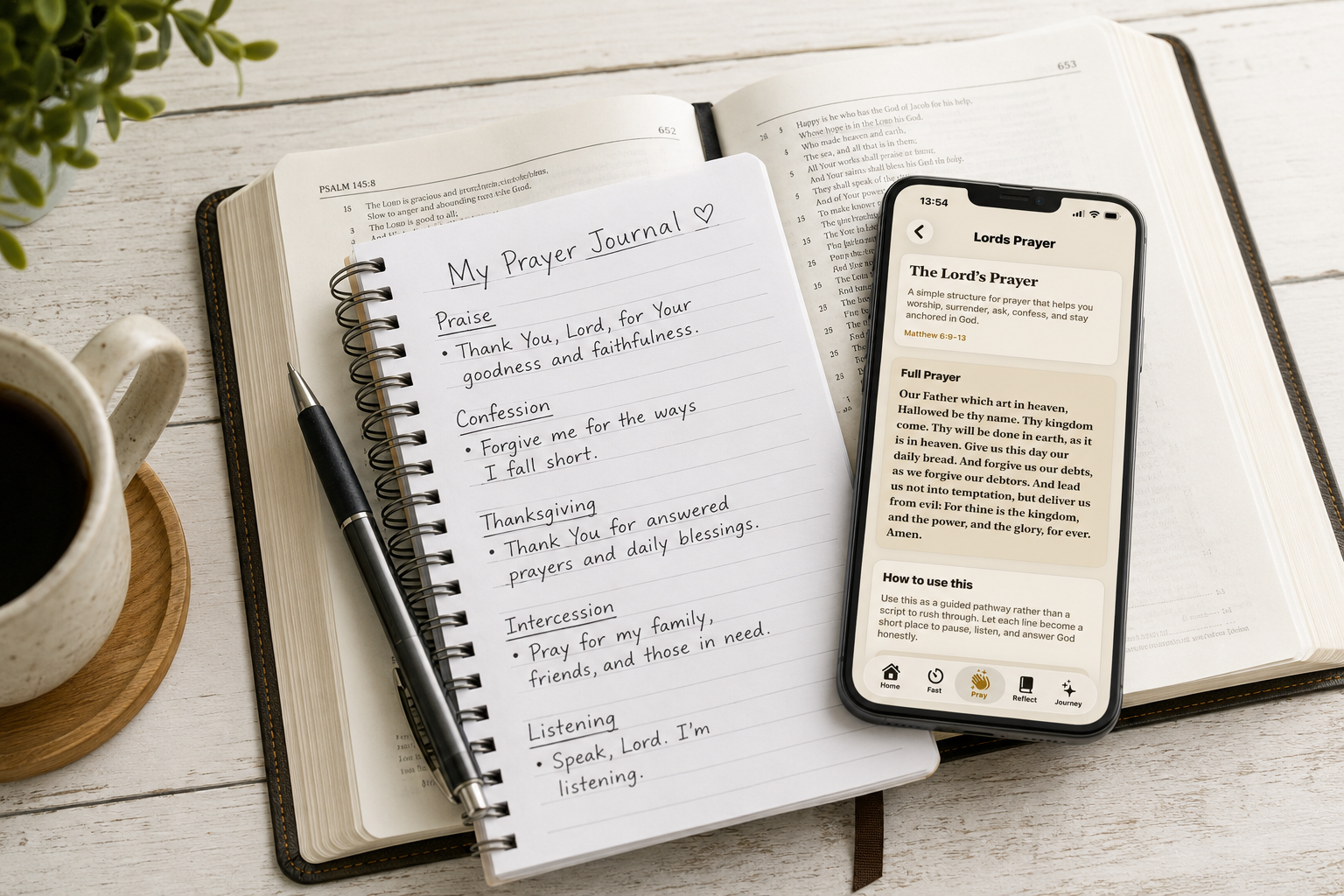
Direct answer: use the app as a servant, not a scorekeeper
Use a Christian fasting app in a prayer-centered way by letting it support intention, scripture, reflection, and wise structure while refusing to treat timers, streaks, or completion as the goal. Start with a clear spiritual purpose, choose a sensible fast, return to prayer when hunger or distraction surfaces, and reflect honestly afterward. If the app begins to make you feel impressive, guilty, anxious, or competitive, simplify your setup or pause it. The point of Christian fasting is not to perform discipline for yourself or others, but to make room for repentance, dependence, attention, and prayer before God.
A Christian fasting app can be genuinely helpful, especially for beginners. It can remind you why you are fasting, give shape to prayer, and help you avoid turning a sincere desire into a vague intention that never becomes practice. But the same structure that helps one person stay focused can tempt another person to measure faith by data.
That is why the healthiest approach is simple: use the app to support devotion, not to replace it. For iPhone users, Fasting Companion is positioned around prayer, reflection, scripture, and spiritual intention rather than as a fitness-first fasting tracker.
What a Christian fasting app is, and what it is not
A few distinctions can keep your expectations clear.
Christian fasting app
A Christian fasting app is a tool designed to help believers approach fasting with spiritual purpose. The emphasis is not merely on when eating stops and starts, but on why the fast is undertaken and how prayer, reflection, and scripture stay connected to it.
Fasting timer
A fasting timer mainly tracks duration. That may be useful, but time tracking alone does not make a fast Christian. A timer can tell you how long you have abstained. It cannot tell you whether you are humbling yourself, praying honestly, or becoming more attentive to God.
Spiritual formation
Spiritual formation is the slower work of being shaped in love, repentance, trust, self-control, and obedience. Fasting may serve that work, but it does not force it. An app can provide prompts and structure; it cannot manufacture maturity.
Performance pressure
Performance pressure appears when the fast becomes a way to prove seriousness, maintain an image, hit perfect numbers, or feel superior. Sometimes it looks proud. Sometimes it looks discouraged and scrupulous. In both cases, attention shifts from God to self-measurement.
If you want a fuller foundation, these related resources help frame the topic well: https://fastingcompanion.com/fasting-and-prayer/, https://fastingcompanion.com/fasting-without-legalism/, and https://fastingcompanion.com/how-to-choose-a-christian-fasting-app-for-iphone/.
A simple app-supported rhythm that stays prayer-centered
If you want to use a Christian fasting app without becoming performance-driven, keep the rhythm uncomplicated.
1. Set intention
Before you begin, name your reason in a sentence or two. You might be seeking clarity, confessing sin, grieving, interceding for someone, or trying to reorient a distracted heart. Specific intention helps prevent mindless rule-keeping.
2. Choose a wise fast
Pick a fast that matches your season, health, responsibilities, and maturity. That may mean a short food fast, a partial fast, or a non-food fast if a food fast is unwise. “Wise” usually beats “impressive.”
3. Add prayer and reflection prompts
Use the app to anchor your attention. A prompt at the start, middle, or end of the day can redirect your mind when the fast drifts into mere discomfort management.
4. Notice distraction or hunger
When hunger, irritability, or self-congratulation appears, do not treat it as failure or victory. Treat it as information. Bring it into prayer. Ask what is being exposed: dependence, impatience, fear, vanity, or simply physical limitation.
5. Reflect afterward
End by asking what happened in your heart, not just whether you finished the plan. Reflection keeps fasting from becoming a completed task with no spiritual learning attached.
This rhythm works because it places attention on response rather than display. The app helps hold the frame, but prayer remains the center.
Practical checklist for before, during, and after a fast
Before the fast
- Decide why you are fasting and write it simply.
- Choose the kind and length of fast with honesty, not ego.
- Plan when you will pray or reflect.
- Think through work, family, church, and physical demands.
- Prepare what you will do instead of scrolling, snacking, or filling the silence.
- Read https://fastingcompanion.com/how-to-prepare-for-a-christian-fast/ if you need a practical starting point.
During the fast
- Return to your stated intention when motivation weakens.
- Use prayer prompts to redirect attention, not to check off spiritual tasks.
- Notice whether the app is helping you pray or making you obsess over time.
- Respond to hunger with prayer, patience, or a wise decision to stop if needed.
- Keep the fast quiet and sincere rather than performative or attention-seeking.
- Use help like https://fastingcompanion.com/what-to-pray-during-a-christian-fast/ when you feel unsure what to say.
After the fast
- Reflect on what surfaced emotionally and spiritually.
- Ask whether the fast increased prayerful dependence or mainly exposed drivenness.
- Record a few honest notes rather than a self-evaluating grade.
- Consider one next step in obedience, repentance, gratitude, or intercession.
- Resist the urge to build identity around completing the fast.
How performance sneaks in, even with good intentions
Most people do not set out to make fasting performative. It usually happens gradually.
You start with a good aim, then begin watching the clock more than your heart. You feel secretly pleased by a difficult fast. Or you compare your practice with someone else’s. Sometimes the pressure is internal: “If I do this perfectly, maybe I will feel spiritually secure.” Sometimes it is external: “I want to be seen as disciplined.”
Apps can intensify those instincts if every interaction feels like measurement. That does not mean apps are the problem. It means self-examination matters.
Tip: Ask one question regularly: “Is this helping me pray, repent, and pay attention to God, or is it mainly helping me admire or accuse myself?” That question can reveal a lot quickly.
If legalism is a recurring concern for you, this is worth reading: https://fastingcompanion.com/fasting-without-legalism/.
When app structure helps, and when to simplify, pause, or choose a non-food fast
App structure helps when you are forgetful, easily distracted, or new to fasting. It can also help when you need language for prayer or a simple place to record reflections. In those moments, guidance is not bondage. It is support.
But structure may need to be simplified when you feel preoccupied with completing the fast exactly right, constantly checking progress, or growing more self-conscious than prayerful. If that is happening, reduce the number of prompts, shorten the fast, or stop tracking duration closely.
There are also seasons when a non-food fast may be the wiser choice. Someone with health concerns, a history that makes food restriction complicated, intense caregiving demands, or work that requires steady energy may decide that fasting from media, entertainment, or another habitual comfort better fits the moment. That is not spiritual compromise. It can be prudence.
The goal is not maximum difficulty. The goal is faithful response. A wise fast that leads to prayer is better than an ambitious fast that leads to pride, secrecy, exhaustion, or collapse.
Examples and edge cases for beginners
If you are new to this, concrete examples help.
A beginner might set aside one meal, use the time for prayer, and jot down one reflection afterward. That is a real fast. Another person might choose a sunrise-to-sunset fast on a day devoted to intercession. Someone else may decide on a partial or non-food fast during a demanding week. None of these needs to become a badge.
Edge cases matter too. If you break a fast earlier than planned, you have not necessarily “ruined it.” Ask why. Was it wisdom, temptation, confusion, or poor planning? Learn from it. If you feel nothing dramatic during the fast, that does not mean it was meaningless. Quiet faithfulness is still faithfulness. If the app makes you tense every time you open it, step back and simplify your use.
FAQ
Can a Christian fasting app still be useful if I dislike tracking?
Yes. Use only the parts that support prayer and reflection. If timing features distract you, keep your setup minimal and focus on intention and notes.
How do I know if my fasting is becoming performance?
Warning signs include pride, anxiety, comparison, guilt over imperfect completion, and more attention to numbers than prayer. Honest reflection usually exposes the shift.
Should beginners start with food fasting?
Not always. A beginner can start with a modest food fast if that is wise, but some people should begin with a simpler or non-food fast depending on their situation.
What should I pray during a fast?
Pray plainly: confess sin, ask for help, intercede for others, express dependence, and sit quietly before God. This guide may help: https://fastingcompanion.com/what-to-pray-during-a-christian-fast/.
Is using an app less spiritual than fasting without one?
No. A tool is not the issue. The issue is whether the tool serves sincere devotion or replaces it with self-measurement.
Summary and next step
In summary, the healthiest way to use a Christian fasting app is to let it support spiritual intention rather than become the center of attention. A Christian fasting app differs from a simple fasting timer because it aims to connect fasting with prayer, reflection, and scripture. Performance pressure begins when completion, image, or metrics matter more than humble dependence. A practical rhythm is simple: set intention, choose a wise fast, add prayer and reflection prompts, notice hunger or distraction, and reflect afterward. When structure helps, use it gratefully. When it creates anxiety, pride, or fixation, simplify, pause, or choose a non-food fast.
For iPhone users who want fasting support centered on prayer and reflection, explore Fasting Companion. You can also continue with related reading here: https://fastingcompanion.com/how-to-choose-a-christian-fasting-app-for-iphone/ and https://fastingcompanion.com/fasting-and-prayer/.