Neurodivergent Fasting: Prayer, Routine, Sensory Needs, and Gentle Wisdom
A gentle starting point
Fasting can be a meaningful Christian practice for neurodivergent believers, but it should be approached with prayer, wisdom, and honesty about real needs. For some people, a food fast may be appropriate. For others, routine disruption, sensory needs, medication schedules, eating-pattern concerns, or mental health factors may make a non-food fast the wiser choice. The goal is not to prove discipline, copy someone else’s method, or ignore your body. The goal is to make prayerful space for God in a way that is faithful, safe, and free from shame.
Direct answer: Can neurodivergent Christians fast? Yes, neurodivergent Christians can fast, but not every fast should involve skipping food. A wise Christian fast is prayerful, honest, and suited to the person. If food restriction would be unwise because of sensory needs, executive-function challenges, medication, eating-pattern concerns, or mental health, a non-food fast may be the better path. Fasting is not a test of worthiness.
What “neurodivergent fasting” means
Neurodivergent fasting is not a separate biblical category. It simply means thinking carefully about fasting when a person lives with ADHD, autism, or other differences that affect attention, regulation, routine, sensory experience, and energy. A faithful approach recognizes that spiritual practices happen in real bodies and real daily patterns.
It helps to distinguish a few terms. Food fasting means limiting or abstaining from food for a set time as part of prayer. Non-food fasting means giving up something else that occupies attention, time, or dependence, such as entertainment, unnecessary phone use, or a habitual comfort. Routine disruption refers to the stress that comes when normal schedules change. Sensory needs include sensitivities around food texture, smell, noise, crowds, and bodily sensations like hunger. Pressure-based fasting happens when someone joins a fast mainly because a church, family, or leader expects it, even when the choice is not wise for that person.
That distinction matters because some Christians hear “fasting” and assume food must always be involved. In practice, many believers need a gentler and more thoughtful path. You can learn more in non-food fasts and how to fast when you cannot skip meals.
A Christian context note: prayerful, wise, and not one-size-fits-all
Christian fasting is meant to deepen prayer, humility, dependence, and attentiveness to God. Church traditions vary in how they teach fasting, how often they practice it, and what forms they emphasize. That variation can be helpful. It reminds us that there is not one universal method every Christian must copy.
Wisdom also means knowing when qualified support matters. If food, medication timing, eating patterns, or mental health are part of the picture, seek appropriate medical, mental-health, or dietetic guidance alongside pastoral care. This article does not diagnose or give medical advice. It simply encourages careful discernment, especially if food restriction could become harmful, confusing, or destabilizing. If that concern is present, read when not to fast from food and fasting with anxiety or depression: a Christian guide.
Before choosing a fast: a practical checklist
- Ask what spiritual intention you are pursuing: repentance, focus, intercession, gratitude, or simplicity.
- Decide whether food fasting is actually wise for you right now, or whether a non-food fast would better support prayer.
- Consider routine: Will this fast disrupt work, school, caregiving, commuting, or sleep in ways that make prayer harder instead of easier?
- Consider sensory needs: Are your safe foods important for regulation, predictability, or basic functioning?
- Consider executive function: Do you need written reminders, a simple plan, or accountability that feels supportive rather than controlling?
- Clarify duration and boundaries before starting. Vague plans often create stress.
- Tell a trusted pastor, spouse, caregiver, or friend if that support would help.
A good plan is usually modest, specific, and sustainable. “I will skip one lunch and use that time to pray with my phone off” is clearer than “I should probably fast more seriously.”
Safe foods and sensory needs matter
Many neurodivergent people rely on safe foods because they are predictable in texture, temperature, taste, or smell. That is not a moral failure. For some, changing food patterns suddenly can increase distress, reduce functioning, or make the entire experience about sensory overload instead of prayer.
If a person’s safe foods are central to regulation, fasting from those foods may not be wise. In some cases, keeping meals simple and familiar while fasting from extras, treats, or a second helping may be a better fit than removing food entirely. For others, any food restriction may be the wrong choice. A non-food fast can still be sincere and spiritually meaningful.
It can also help to think about environment. Hunger may heighten sensitivity to noise, light, crowds, or strong smells. If church events already feel overwhelming, adding a demanding fast may not increase spiritual focus. Gentle wisdom asks, “Will this help me pray, or will it push me into overload?”
Routine-friendly fasts often work better
Routine is not the enemy of devotion. For many neurodivergent Christians, routine is what makes devotion possible. A routine-friendly fast respects existing anchors rather than tearing them down. That might mean fasting on a quieter day, keeping usual meal times while simplifying what you eat, or pairing a fast with a fixed prayer habit already in place.
Examples include fasting from evening scrolling and replacing it with ten minutes of prayer, keeping breakfast and lunch but skipping snacks while reading a psalm at the usual snack time, or setting aside one regular commute for silent prayer instead of podcasts. These approaches create space for God without turning the whole day into an executive-function puzzle.
If you need structure, write down exactly what you will do before, during, and after the fast. Predictability can lower anxiety and free attention for prayer.
ADHD and executive-function considerations
ADHD can affect planning, time awareness, impulse control, and follow-through. That does not make fasting impossible, but it can make overly ambitious fasting plans backfire quickly. A person may forget the plan, overcommit, become dysregulated, or swing between intensity and discouragement.
Keep the plan visible and simple. Use alarms, calendar notes, or a written prayer prompt. Choose one clear practice instead of stacking several. If you are fasting from something digital, decide in advance what counts and what does not. If you are doing a food fast, decide how you will transition back to regular eating, because “I will figure it out later” may not work well.
ADHD can also make group fasts difficult if expectations are unclear. Ask direct questions: What exactly are we doing? For how long? Is there flexibility? Is a non-food option welcome? Clarity protects peace.
Autism, special interests, and careful discernment
Autistic Christians are sometimes told to fast from special interests as though intensity itself must be corrected. That is too simplistic. A special interest may be a source of joy, stability, recovery, or connection. It should not be treated as a default fasting target just because it matters deeply.
A better question is whether a particular activity is crowding out prayer in this season. If so, a gentle limit may help. But the answer may also be no. In some cases, reducing a stabilizing interest could increase distress and make prayer harder. Autistic believers deserve the same thoughtful discernment as anyone else, not blanket assumptions.
If a special interest is chosen as part of a fast, make the plan narrow and clear: perhaps reducing one related habit for a short period while adding a specific prayer practice. Avoid framing the interest itself as shameful.
When church or family participation feels pressuring
Group fasting can be encouraging, but it can also create pressure. A church-wide invitation may sound voluntary while still feeling hard to refuse. Families may unintentionally communicate that a “real” Christian fast always means skipping food. Neurodivergent people, especially younger believers or those who depend on caregivers, may feel trapped between honesty and belonging.
If that is your situation, it is reasonable to ask for an adapted form of participation. You might say, “I want to join prayerfully, but food restriction is not wise for me. I will participate through a non-food fast and set prayer times.” Church leaders can help by teaching that fasting should never become a badge of maturity or a competition in sacrifice.
For churches, the pastoral question is not “Will everyone do the same thing?” but “Will everyone have a faithful way to participate?”
During and after the fast
During the fast, keep prayer concrete. Use a short verse, one prayer list, or one repeated intention. Notice whether the fast is creating attentiveness or simply producing confusion and strain. If it becomes unwise, stop without self-accusation. The point is communion with God, not endurance for its own sake. For help building prayer into the practice, see fasting and prayer.
After the fast, reflect briefly. What helped? What was too much? Did the plan fit your body, your mind, and your season of life? A short review turns one attempt into useful wisdom for next time. This is especially important for neurodivergent Christians, because sustainable spiritual practices often depend on honest pattern recognition.
Need a gentle structure for prayerful fasting?
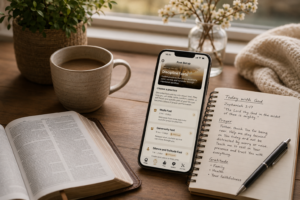
Fasting Companion is an iPhone app designed to support spiritual intention, prayer, reflection, and before, during, and after fast guidance. It is built for a calm, thoughtful experience, not fitness tracking.
Frequently asked questions
Do neurodivergent Christians have to fast from food for it to count?
No. If fasting from food would be unwise, a non-food fast can still be sincere, prayerful, and spiritually meaningful.
What if hunger makes sensory overload or dysregulation worse?
That is important information, not a failure. A gentler fast, a modified food plan, or a non-food fast may be more appropriate.
Should autistic Christians fast from special interests?
Not by default. Special interests should be approached with discernment, not suspicion. The question is whether a specific habit is hindering prayer in this season.
How can someone with ADHD stay consistent in a fast?
Use a very simple plan, visible reminders, and a defined prayer action. Short, clear, repeatable practices usually work better than complicated goals.
What if my church is doing a group fast and I cannot participate the same way?
Ask for an adapted way to join. Shared prayer matters more than identical methods.
Summary and next step
- Neurodivergent Christians can fast, but wisdom may point toward food fasting, a modified fast, or a non-food fast.
- Routine disruption, sensory needs, executive function, medication, eating patterns, and mental health all matter.
- Safe foods are not automatically a spiritual obstacle.
- Group pressure should never replace personal discernment, pastoral care, and qualified professional guidance where needed.
- The purpose of fasting is prayerful attention to God, not performance.
If you are deciding what kind of fast fits your situation, start small, be honest, and choose a form that makes prayer more possible. Related reading: when not to fast from food, how to fast when you cannot skip meals, and non-food fasts.