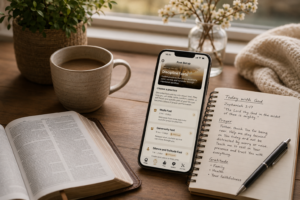
Non-food fasts: Why Biblical fasting isn’t only about abstaining from food
Biblical fasting is most often associated with food, but its deeper purpose is not hunger for hunger’s sake. In Scripture, fasting is about creating space for God through prayer, humility, reflection, and intentional dependence. That is why non-food fasts can also be meaningful when they help remove distraction, expose unhealthy habits, and turn the heart back toward God.
Modern culture usually talks about fasting in terms of health goals, productivity, or self-improvement. The Bible approaches it differently. Again and again, fasting appears as a spiritual practice that slows us down so we can seek God more honestly.
Food matters because it is one of our most basic physical needs. Stepping away from it can reveal how often we reach for comfort, routine, or emotional relief without even noticing. But the goal of biblical fasting was never simply to avoid eating. The goal was spiritual attentiveness.
That is why many Christians ask a fair question today: if food fasting is central in Scripture, can a non-food fast still be spiritually valid? In many cases, yes—if it is approached prayerfully and intentionally rather than as a trend or personal challenge.
What the Bible actually emphasizes in fasting
Jesus gives one of the clearest teachings on fasting in Matthew 6 when He says, “When you fast, do not look somber as the hypocrites do.” The important word is when. Jesus assumes fasting will be part of the life of His followers. Yet His concern is not mainly with technique. He focuses on motive, humility, and sincerity before God.
The same pattern appears throughout Scripture. Daniel fasted while seeking understanding from God in Daniel 10. Ezra proclaimed a fast in Ezra 8:21 as the people sought God’s protection and guidance. In Acts 13:2–3, the early church fasted while praying and discerning ministry direction. In each case, fasting is woven together with prayer, surrender, repentance, worship, grief, or guidance.
Even Isaiah 58 pushes beyond the outward act itself. God confronts fasting that looks religious on the surface but does not produce humility, justice, or obedience. That passage reminds us that fasting is never meant to be an empty ritual. It is meant to reorient the heart.
So while the Bible most often presents fasting as abstaining from food, Scripture consistently points to something deeper than the menu. Fasting is about dependence on God.
Why food became central to fasting
Food is deeply connected to comfort, survival, routine, pleasure, and emotion. That is exactly why food fasting carries spiritual weight. It interrupts a normal pattern that feels automatic and necessary. It exposes what is happening underneath daily life.
Many people discover during a fast that they do not only eat because they are hungry. They eat when stressed, bored, tired, disappointed, or overwhelmed. Food can become part of how we regulate emotions and escape discomfort. Fasting brings those hidden patterns into the light.
That exposure is not meant to create shame. It creates honesty. And honesty is often where spiritual growth begins.
At the same time, food fasting is not appropriate for everyone. People who are pregnant, have medical conditions, take certain medications, or have a history of eating disorders should seek medical advice before attempting it. In those situations, a non-food fast may be a wiser way to practice restraint and spiritual focus.
Why non-food fasts can still be spiritually meaningful
When Jesus answered Satan in the wilderness, He said, “Man shall not live by bread alone, but by every word that comes from the mouth of God” (Matthew 4:4). He was not denying physical needs. He was revealing that people have deeper needs than physical satisfaction alone.
That truth matters in a distracted age. Many believers today struggle not only with appetite but with constant stimulation. Phones, entertainment, shopping, noise, and endless information compete for attention all day long. In that setting, stepping away from something other than food can expose the same kinds of dependence, restlessness, and impulse that food fasting often reveals.
A non-food fast does not replace biblical food fasting in every sense. But it can support the same spiritual principle: making room for prayer, stillness, and attention to God. If you want to explore that idea more deeply, this biblical look at why Christians fast and this article on creating space for God in a distracted world through fasting fit naturally alongside the practice.
What a non-food fast might look like
A non-food fast is an intentional decision to step away from a normal source of comfort, noise, or consumption for a set period so your attention can be redirected toward God. The key is choosing something meaningful, not random.
- social media and endless scrolling
- streaming platforms, gaming, or entertainment binges
- constant news checking
- unnecessary phone use
- music, podcasts, or background noise that keeps silence away
- online shopping or browsing for things you do not need
- caffeine or another comfort habit that strongly shapes your day
- multitasking and constant busyness
- unnecessary talking during a period of silence and solitude
For some people, noise is the real issue. Silence feels uncomfortable, which is why silence and solitude can function like a fast. For others, the challenge is fragmented attention, making improving mental focus and discipline through fasting especially relevant.
How to choose a non-food fast wisely
Start small and be specific. “I will use my phone less” is vague. “I will avoid social media after dinner for seven days and use that time for prayer and Scripture” is clearer. The point is not legalism. The point is purposeful interruption.
It also helps to decide what will replace the habit you are setting aside. Without prayer, reflection, and Scripture, fasting easily becomes self-denial without spiritual direction. If you are new to fasting in general, this guide on how to start fasting can help you begin with simplicity.
Why spiritual engagement matters during any fast
One of the biggest misunderstandings about fasting is assuming that abstinence itself automatically produces growth. It does not. You can skip meals, delete apps, or turn off the television and still miss the point if your heart never turns toward God.
Biblical fasting consistently involved spiritual engagement. People prayed. They repented. They worshiped. They sought wisdom. They grieved honestly before God. They listened.
That is why the most fruitful fasts are usually the ones that include a plan for prayer and reflection. You might read a psalm when you feel the urge to check your phone. You might use moments of silence to confess anxiety or ask God for clarity. You might journal what surfaces when comfort is removed.
Readers who want reflective support can also explore the Fasting Companion iPhone app as a prayerful pathway for staying spiritually engaged during a fast.
A few common questions
Do non-food fasts count as real fasting?
They can be spiritually meaningful, but they should be understood as intentional abstinence modeled on the deeper purpose of fasting, not as a way to casually redefine every biblical fast. Food fasting remains central in Scripture, yet non-food fasts can still help cultivate surrender and attentiveness.
What if I try a non-food fast and just feel irritated?
That irritation may be revealing something important. Fasting often uncovers attachments we did not realize had such a hold on us. Bring that frustration into prayer instead of treating it as failure.
How long should a non-food fast last?
There is no single formula. Some people begin with a day, a weekend, or one week. The wiser question is whether the fast is clear, sincere, and connected to prayer.
Create space for God, not just absence
The absence of food is not the destination. The greater goal of fasting—whether from food or from distraction—is surrender, dependence, and renewed attention to God.
Final reflection
Biblical fasting is not about proving spiritual strength. It is about surrender. It teaches dependence over self-sufficiency, discipline over impulse, prayer over distraction, and intentionality over constant consumption.
Food fasting remains a powerful biblical practice because food touches something basic in us. But Scripture’s larger message points beyond physical hunger toward spiritual hunger. That is why non-food fasts can be valuable in a noisy age. They help us notice what fills our minds, captures our desires, and competes for our dependence.
So ask honestly: what do you consume most? What do you reach for when you feel stressed, restless, bored, or lonely? And what might happen if you created even a small, intentional space for God in that very place?
Father, teach me to recognize the distractions and comforts that shape my attention each day. Help me approach fasting not as performance, but as an opportunity to make space for You. As I set aside food or other distractions, draw my heart toward deeper humility, prayer, and dependence. Amen.